


A walk around Ruangrat Road reveals how trade, tin mining and Hokkien migration shaped Ranong’s old market streets and civic history.
This is a flexible town walk rather than turn-by-turn navigation. Buildings change use, market activity shifts through the day and pavements can be uneven. Check current access, use safe crossings and ask permission before photographing people or private interiors.
The route begins with the story of the road itself, then follows the connections between commerce, Chinese settlement, the old market and Ranong’s early governors.
Why Ruangrat Road matters
Ruangrat Road is not simply a convenient street through central Ranong. Official provincial history records that King Chulalongkorn named a group of town roads during his 1890 visit. Ruangrat was the new road running from the old-market junction past the governor’s new residence.
Thailand’s official old-town documentation describes Ruangrat as a road through the market and trading district. It also identifies it as one of ten historic streets whose names reflected the places and functions they passed.
Today, the road remains part of everyday Ranong. Shops, traffic, food and newer buildings sit alongside traces of the older trading town. The heritage is not contained in a single monument; it is spread through the street pattern, market areas and stories attached to them.
Begin on the road, not at a checklist
Blu Monkey Hub & Hotel Ranong is listed at 298 Ruangrat Road on the official property site. That makes the hotel a practical starting point for understanding the town’s historic commercial spine.
Before walking, ask the Monkey Desk about current conditions and which market areas are active that day. The hotel can provide local tips, but opening hours and access to heritage sites should still be confirmed with the site or local authority.
Walk slowly enough to notice how the road changes. Look at the width of shopfronts, upper-floor windows, signs, rooflines and the way businesses open onto the pavement. Avoid assuming every old-looking building dates from the same period.
Ranong’s tin and trade story
Ranong’s growth was closely connected to tin. Provincial historical records describe mining taxation, labour and trade as central to the town’s development during the nineteenth century.
The old-town study also describes Ranong as an important southern mining town, with heritage buildings and places concentrated in the urban area. The market was part of that economy: goods, workers and information moved through it as the settlement expanded.
This history helps explain why the town developed links across the Andaman coast and Malay Peninsula. Ranong was not isolated. Its commercial networks connected it with places including Takua Pa, Penang and Singapore.
Khaw Soo Cheang and the Hokkien connection
A central figure is Khaw Soo Cheang, known in Thai as Kho Su Jiang and later as Phraya Damrong Sujarit Mahisornpakdee. Ranong provincial history identifies him as a Hokkien Chinese migrant who came to Thailand, entered the tin-tax business and later became a governor of Ranong.
The same records describe his role in encouraging Thai and Chinese settlers to establish homes and livelihoods in the town. His story is one reason Hokkien migration cannot be separated from Ranong’s civic and commercial history.
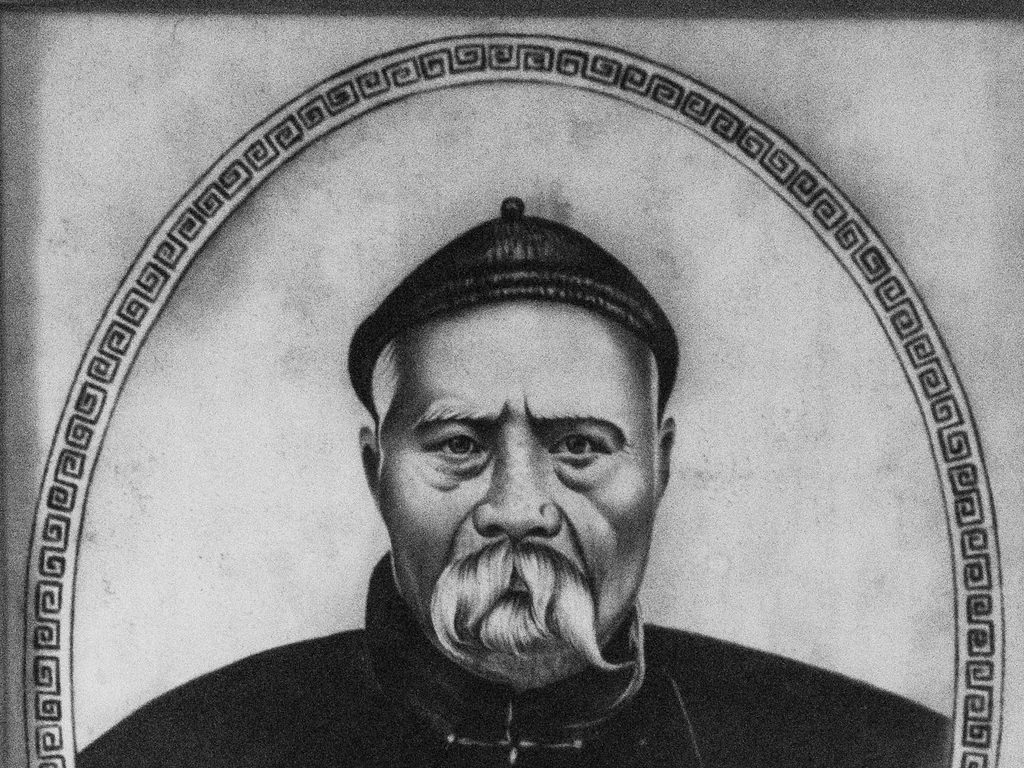
The article image is a historical portrait of Khaw Soo Cheang. It was photographed from a painting associated with the Ranong governor’s residence and is retained as public-domain historical material.
Remember that one prominent family does not represent every Chinese migrant or every community experience. The broader story includes miners, traders, craftspeople, families and later generations whose lives are less visible in official records.
Look for the old market pattern
A royal travel account reproduced in provincial history described the old market in 1890 as a dense street of almost one hundred buildings, with a strongly Chinese population. That description belongs to its time; the market and its communities have changed considerably since then.
Use the historical account as context rather than a promise of what you will see today. The useful questions are:
- Where does the street narrow or widen?
- Which blocks still follow older shop-house proportions?
- Where do food and everyday trade remain active?
- Which buildings appear adapted rather than preserved as museums?
- How does current multilingual community life differ from the historical record?
A market is a working place, not a display. Keep entrances clear, buy something if you take up a vendor’s time and ask before photographing a stallholder.
Add the governor’s story carefully
Tourism Authority of Thailand material places the Governor’s Residence on Ruangrat Road and links it to Ranong’s early administration. It is a logical heritage stop when accessible.
Do not assume the residence is open when you arrive. Verify current visiting arrangements and respect closed gates or restricted areas. Even from the street, the location helps connect the road, the governing family and the town’s expansion away from the earlier waterfront settlement.
Ranong also has a reconstructed Rattana Rangsan Throne Hall associated with the royal visit. If you add it to the walk, check its current access and remember that a reconstruction should not be described as an untouched nineteenth-century building.
Food is part of the history
Hokkien and wider Chinese influence can also be approached through food, but avoid turning every noodle, bun or dumpling into a simple heritage label. Recipes change, families adapt them and Ranong also reflects southern Thai, Malay, Myanmar and coastal influences.
The Ranong food guide explains how to approach dim sum, local markets, seafood and cafes without relying on a fixed restaurant list. For a heritage walk, a morning meal or market snack can add context without requiring a full food tour.
Ask vendors what they make and how it is eaten. Do not assume a dish’s origin from its appearance alone.
A practical walking plan
Keep the route compact and allow roughly half a day only as a planning window, not a guaranteed duration. Your pace will depend on weather, crossings, stops and whether any heritage property is open.
Early start
Begin after breakfast, when the day may be cooler and market activity more visible. Walk a section of Ruangrat Road, then pause at the old-market area.
Mid-walk stop
Add the Governor’s Residence or another verified heritage site if access is available. If it is closed, continue with the street and market rather than trying to enter.
Finish with food or a cafe
End with lunch, dim sum or a cafe break. The goal is to connect the history with the present town, not to collect as many landmarks as possible.
For a wider plan including hot springs and other attractions, use the 48-hour Ranong itinerary.
Walking in Ranong weather
Rain is part of planning in Ranong. Carry a compact umbrella or light rain layer, protect your phone and wear shoes that grip on wet surfaces.
Do not shelter in private doorways without permission. If rain becomes heavy, stop in an open business and wait rather than rushing across a flooded or poorly visible street.
Heat and humidity also matter. Bring water and take a break before fatigue makes road crossings less safe.
Respect the living town
Heritage walks work best when the town is treated as a community rather than a backdrop.
- Ask before photographing people.
- Avoid blocking narrow pavements and shop entrances.
- Keep voices low near shrines and residences.
- Do not enter deteriorating or closed buildings.
- Verify stories before repeating them as fact.
- Support local shops when it fits your visit.
For transport planning to and around town, see the Ranong transport guide. If you need current local directions, use the hotel’s contact page before setting out.
Read the street in layers
Ruangrat Road offers a way to understand Ranong beyond a list of attractions. Its market role, royal-era street plan, tin economy and Hokkien connections are layers of one town story.
Walk with time to look, ask and adjust. The most useful heritage detail may be a street alignment, an adapted shopfront or a conversation that helps connect the documentary history with Ranong today.
Check current rooms and location details on the official Blu Monkey Hub & Hotel Ranong website.